Mastering the Canvas: How to Start Painting for Beginners
August 27, 2026 16 min read 3,295 words
Embark on your artistic adventure with confidence, learning the fundamentals to create beautiful paintings from scratch.
Start Painting Today
Demystifying Beginner Painting Supplies: What You Really Need
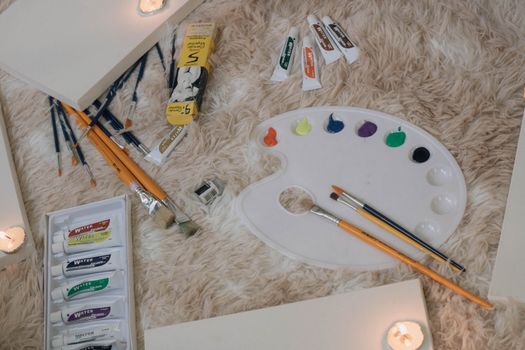 Photo: Mayara Caroline Mombelli / Pexels
Embarking on your painting journey can feel overwhelming when faced with the dizzying array of art supplies available. The good news is, you absolutely do not need to break the bank or purchase every item in the art store to begin. For those wondering how to start painting for beginners, the key is to focus on a few essential, versatile items that will allow you to explore different techniques without significant investment. Let's break down the core components you'll need, focusing on acrylic paints as they are widely recommended for novices due to their quick drying time, water solubility, and vibrant colors.
First and foremost, choose your paint type. While oils offer rich textures and watercolors provide delicate washes, acrylics strike a perfect balance. They dry quickly, which means you can layer colors without long waits, and they clean up easily with water, making them ideal for a low-fuss setup. Look for a beginner's set that includes primary colors (red, blue, yellow), black, and white. This limited palette is actually an advantage, as it forces you to learn color mixing – a foundational skill in painting. Brands like Liquitex Basics, Reeves, or Artist's Loft offer excellent starter sets that won't strain your wallet but still provide good pigment quality. Resist the urge to buy dozens of pre-mixed colors; mastering primaries will serve you better in the long run.
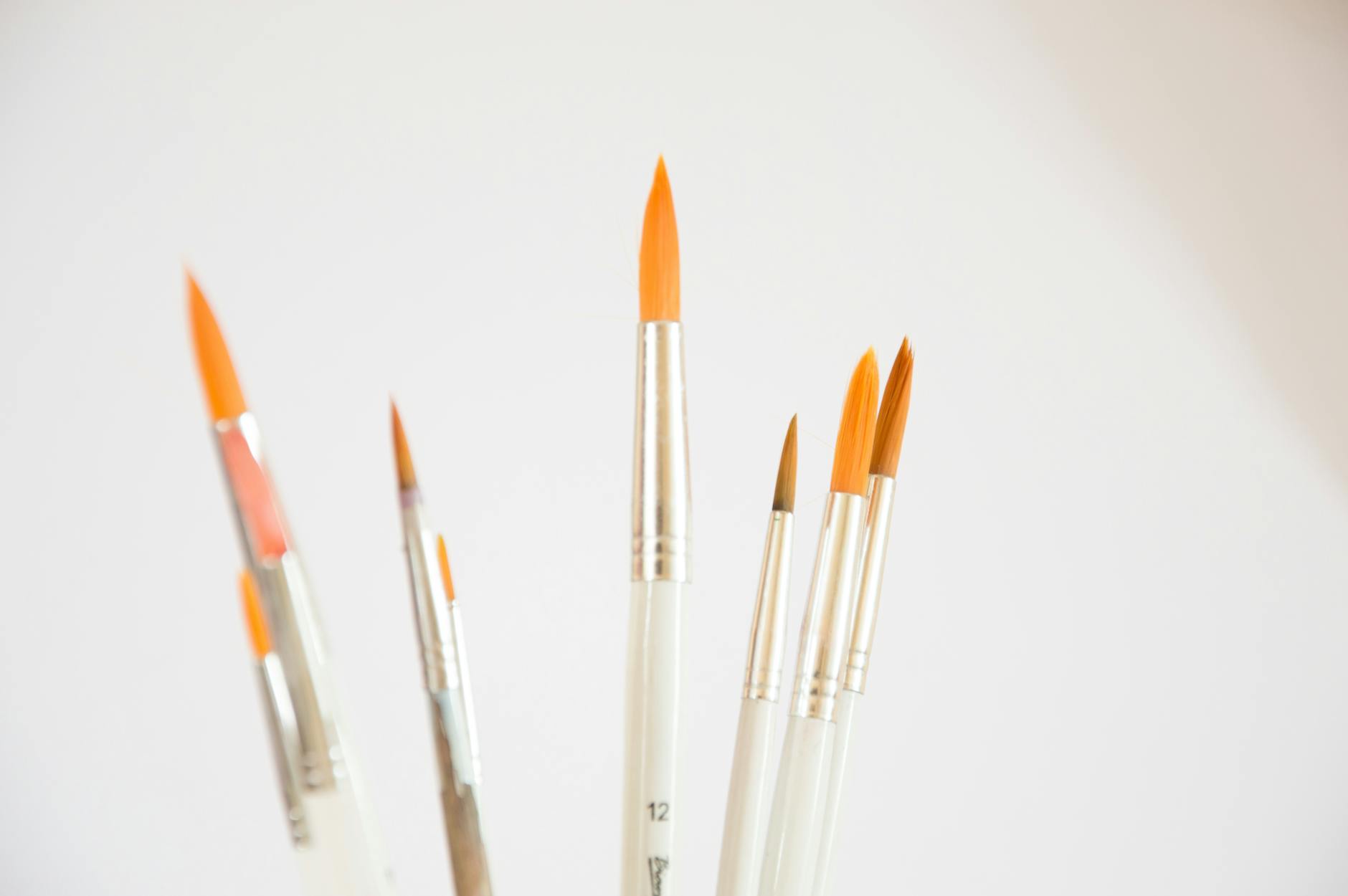
Next, brushes are your direct connection to the canvas. For beginners, a small assortment of synthetic brushes will suffice. A good starter set typically includes a large flat brush for covering large areas, a medium round brush for details and lines, and a small detail brush for fine work. Don't invest in expensive natural hair brushes just yet; synthetic bristles are durable, easy to clean, and work well with acrylics. Over time, you'll discover which shapes and sizes you prefer, but these three will cover most of your initial needs. Remember to clean your brushes thoroughly after each use to prolong their life and maintain their shape.
Your painting surface is another crucial element. Canvases come in various forms, from stretched canvas to canvas boards and paper. For absolute beginners, canvas paper or inexpensive canvas panels are a fantastic choice. They are more affordable, allowing you to experiment freely without the pressure of 'ruining' an expensive surface. As you gain confidence, you can move to stretched canvases. A small to medium size (e.g., 8x10 or 11x14 inches) is manageable and less daunting than a large blank space.
Exploring different surfaces can also teach you about how paint behaves and adheres.
Finally, don't forget the miscellaneous but essential items. A palette to mix your paints is crucial; this can be a dedicated plastic palette, a ceramic plate, a sheet of wax paper, or even an old cutting board. You'll also need a water container for rinsing brushes (an old yogurt cup or jar works perfectly), paper towels or an old rag for blotting brushes and cleaning up spills, and perhaps an easel, though painting flat on a table is perfectly fine. Some artists also find a spray bottle with water useful for keeping acrylics workable longer. With these foundational supplies, you're more than ready to dive into the exciting world of painting without feeling overwhelmed by choices or cost.
Building Your Foundation: Essential Techniques for New Painters
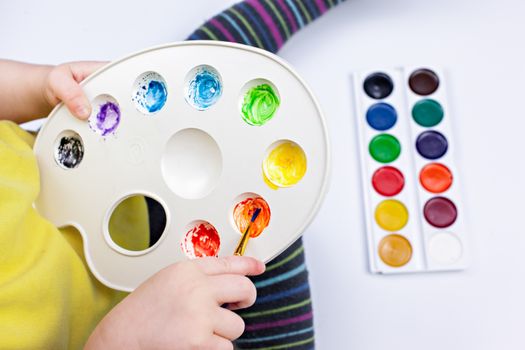 Photo: Julia Filirovska / Pexels
Once you've gathered your basic supplies, the next step in how to start painting for beginners is to familiarize yourself with fundamental techniques. These aren't just theoretical concepts; they are practical skills that will empower you to translate your ideas onto the canvas. Don't expect perfection immediately; the goal here is understanding and practice. Think of these as your artistic ABCs.
Color mixing is perhaps the most vital skill to develop. With your primary colors (red, blue, yellow) plus black and white, you can create an astonishing spectrum of hues. Start by experimenting with mixing two primary colors to create secondary colors (red + yellow = orange; blue + yellow = green; red + blue = purple). Then, add white to lighten colors (creating tints) and black to darken them (creating shades). Understanding how colors interact and how to achieve specific tones will give you immense control over your palette. Practice creating a color wheel to see these relationships firsthand. Pay attention to how small adjustments in proportion can drastically change the resulting color. This skill not only saves money on buying pre-mixed tubes but also deepens your understanding of color theory, which is crucial for creating harmonious paintings.
Mastering basic brush strokes is another cornerstone. Different brushes and varying pressure can create a multitude of effects. Experiment with your flat brush: try laying down broad, even washes of color, then use its edge for thinner lines. With your round brush, practice making thin lines by using just the tip, and thicker lines by applying more pressure. The detail brush is, as its name suggests, for the finest lines and smallest details. Don't just dab; try twisting the brush, dragging it, and using quick, short strokes versus long, flowing ones. The more you experiment, the more intuitive brush control will become. This tactile exploration helps you discover the capabilities of your tools and how they respond to your hand.
Layering is a technique particularly well-suited for acrylics due to their fast drying time. This involves applying one thin coat of paint, letting it dry, and then applying another coat on top. This allows you to build up color intensity, create depth, and even correct mistakes without smudging the underlying layers. Begin with thin washes, almost like watercolors, and gradually build up to thicker applications. This method is excellent for creating subtle transitions, adding shadows, and developing complex textures. It also teaches patience and foresight in your painting process.
Understanding values – the lightness or darkness of a color – is equally important. A painting with strong values will have more visual impact and depth, even if it's monochromatic. Practice creating a grayscale chart from pure white to pure black, and then try to replicate the values you see in a simple object using only black and white paint. This exercise trains your eye to see light and shadow, which is fundamental for making objects appear three-dimensional on a two-dimensional surface. Don't underestimate the power of value; it often contributes more to a painting's success than color alone.
Finally, learn about composition. This refers to how you arrange elements within your painting. Simple rules like the 'rule of thirds' (dividing your canvas into nine equal parts with two horizontal and two vertical lines, and placing points of interest at their intersections) can dramatically improve your artwork. Experiment with placing your subject off-center, or using leading lines to guide the viewer's eye. Good composition creates balance, interest, and tells a story. While these techniques may seem like a lot to absorb, approach them as playful experiments rather than rigid rules. Each practice session builds confidence and refines your artistic voice.
Your First Painting Project: Simple Ideas and Mindset for Success
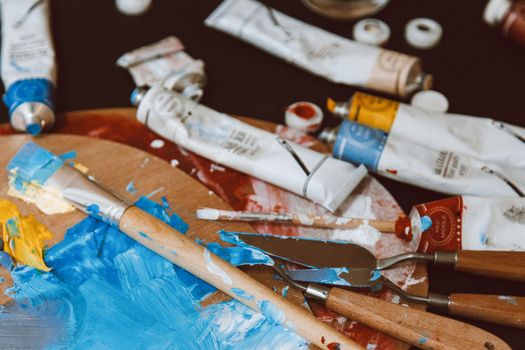 Photo: ROMAN ODINTSOV / Pexels
Now that you have your supplies and a grasp of basic techniques, it’s time to tackle your very first painting project. This is often where beginners get stuck, paralyzed by the fear of a blank canvas. The most crucial advice for how to start painting for beginners at this stage is: start simple, embrace imperfection, and focus on the joy of creation. Your first painting is not meant for a gallery; it’s a learning experience.
Finding inspiration for your initial projects can be as simple as looking around your home.
Consider starting with still life. Pick a simple object – an apple, a coffee mug, a single flower, or a houseplant. Arrange it on a plain background, perhaps draped with a simple cloth, under consistent lighting. The beauty of still life for beginners is that your subject won't move, allowing you to observe its shapes, colors, and shadows at your own pace. Don't try to make it photo-realistic. Instead, focus on capturing the basic form, the interplay of light and shadow, and the main colors you observe. This exercise directly applies your knowledge of values and color mixing in a practical context. Try painting the same object multiple times, each time focusing on a different aspect: one time for color, another for light and shadow, another for brushwork.
Another excellent starting point is abstract painting. This might sound counterintuitive, but abstract art allows you to explore color, texture, and composition without the pressure of depicting a recognizable object perfectly. Start by simply laying down colors that appeal to you, experimenting with different brush strokes, and layering. You can use masking tape to create sharp lines, or dilute your paints to create washes. The freedom in abstract painting can be incredibly liberating and helps you get comfortable with the feel of the brush and the flow of paint without the stress of 'getting it right.' It's a fantastic way to develop your intuition and build confidence in your ability to create something visually interesting.
Landscape elements are also great for beginners. Instead of trying to paint a sprawling vista, focus on a single, simplified element like a distant tree line, a simple cloud formation, or a single hill. You can even work from photographs, but try to simplify what you see into basic shapes and colors. The goal isn't to reproduce the photo exactly, but to interpret it through your own brushstrokes. This helps you practice observing and translating three-dimensional reality onto a two-dimensional surface, a core skill in representational art.
Above all, cultivate a positive and patient mindset. There will be moments of frustration, paintings that don't turn out as you envisioned, and perhaps even a desire to give up. This is a normal part of any learning process. Instead of seeing these as failures, view them as valuable lessons. What did you learn from that attempt? What could you try differently next time? Keep your early paintings, even the ones you dislike, as a record of your progress. You'll be amazed at how far you come. The journey of painting is a marathon, not a sprint. Celebrate small victories, enjoy the sensory experience of working with paint, and allow your creativity to flow without judgment. The most important thing is to simply start and keep going.
Common Pitfalls and How to Avoid Them: Tips for New Artists
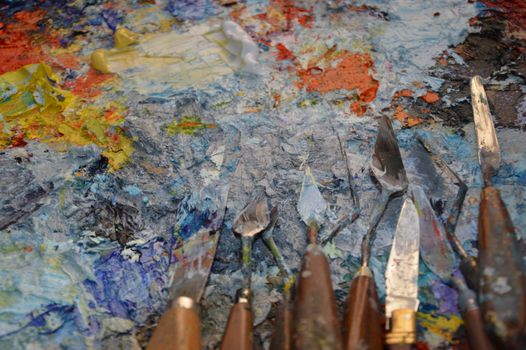 Photo: Ulrick Trappschuh / Pexels
As you delve into the rewarding world of painting, especially when learning how to start painting for beginners, you'll inevitably encounter certain challenges. Recognizing these common pitfalls early on can save you a lot of frustration and help keep your artistic journey enjoyable and productive. Here are some key tips and mistakes to watch out for, along with strategies to navigate them:
* **Over-reliance on Expensive Supplies:** A common misconception is that better tools make a better artist. While high-quality supplies are wonderful, beginners don't need them. Starting with professional-grade paints and brushes can be intimidating and wasteful if you're still figuring out your style. Stick to student-grade acrylics and basic synthetic brushes. Upgrade only when you genuinely feel your current tools are limiting your expression, not before.
* **Trying to Be Perfect Too Soon:** The blank canvas can be daunting, and many beginners strive for perfection on their very first attempt. This leads to fear, hesitation, and often, abandonment. Remind yourself that every artist, even the masters, created countless 'bad' paintings on their journey. Your initial goal is to learn, experiment, and enjoy the process, not to produce a masterpiece. Loosen up, embrace mistakes as learning opportunities, and remember that acrylics can often be painted over.
* **Not Learning Color Theory:** Jumping straight into painting without understanding basic color mixing and relationships is like trying to write a novel without knowing the alphabet. Your paintings might look flat, muddy, or unharmonious. Dedicate time to practice mixing primaries, secondaries, and tertiary colors. Understand warm and cool tones, and how to create tints and shades. This foundational knowledge will elevate your work significantly.
* **Ignoring Values (Light and Shadow):** Many beginners focus heavily on color but neglect value. A painting with strong values (a good range of lights and darks) will have more depth and realism, even if the colors are slightly off. Practice sketching in charcoal or pencil to train your eye to see forms in terms of light and shadow before adding color. This ensures your subjects appear three-dimensional.
* **Using Too Much Water with Acrylics:** While acrylics are water-soluble, adding too much water can dilute the pigment, making your paint thin, streaky, and less vibrant. It can also cause the paint to lose its adhesive qualities. Use water sparingly to thin paint or clean brushes. If you need to make your paint more fluid, consider using an acrylic medium designed for that purpose, rather than just water.
* **Not Cleaning Brushes Properly:** Neglecting brush care is a fast track to ruined brushes. Dried paint in the ferrule (the metal part holding the bristles) can splay bristles and make brushes unusable. Always clean your brushes thoroughly with soap and water immediately after use. Reshape them and store them bristles-up or flat to maintain their form.
* **Comparing Yourself to Others:** The art world is full of incredible talent, and it's easy to fall into the trap of comparing your beginner work to seasoned professionals. This comparison is unfair and demotivating. Focus on your own progress and journey. Celebrate your improvements, no matter how small, and draw inspiration from others without letting it diminish your own efforts.
* **Lack of Consistency:** Like any skill, painting requires consistent practice. You don't need to paint for hours every day, but regular, even short, painting sessions will yield better results than infrequent, long sessions. Try to set aside a specific time each week, even if it's just 30 minutes, to keep your skills sharp and momentum going.
By being aware of these common pitfalls and actively working to avoid them, you can create a more enjoyable and productive learning experience as you discover the immense satisfaction of painting.